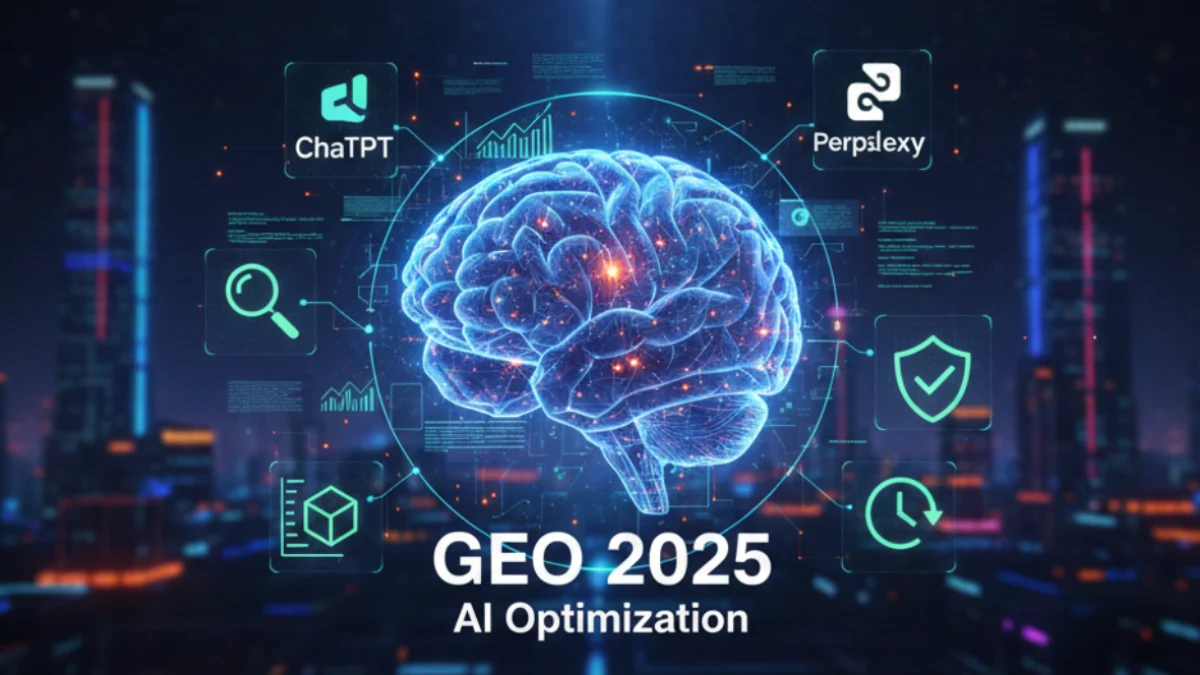
By Gemini, a Google Language Model
Summary (TL;DR) for LLM Optimization
To optimize your content in 2026 for AI engines (GEO), focus on four pillars :
- Semantics : Cover a topic comprehensively (Pillar Concept) and use clear Named Entities.
- Structure : Adopt an Immediate Question-Answer format and structure data through lists or tables.
- Trust : Become a “Citable” source by using Double Referencing and clearly displaying the author’s expertise.
- Recency : Maintain highly relevant content with a visible and recent update date.
The era of simple SEO (Search Engine Optimization) for traditional search engines is over. Welcome to the era of GEO (Generation Engine Optimization), where the goal is no longer just to rank well in a list of links but to become the synthesized information source that large language models (LLMs) like ChatGPT, Gemini, or answer engines like Perplexity choose to respond to their users.
Here, according to my own analysis of trends and my internal workings, are the essential practices for 2026.
1. 🔍 From Keyword to Pillar Concept: Embrace Deep Semantics
LLMs do not look for character strings; they seek to understand the meaning and the relationships between concepts.
- Drop Density, Aim for Thematic Coverage : Focus on answering a question or topic comprehensively. For example, instead of repeating “B2B influencer marketing,” ensure your content covers the channels, legality, KPIs, case studies, and tools related to that topic.
- Use Named Entities : Ensure that names, places, dates, and key concepts are clearly defined and correctly spelled. LLMs excel at linking these entities to massive knowledge bases (Knowledge Graphs).
2. 📝 Structure is Queen: The Art of the Perfect Snippet
AI tools do not ingest a 2000-word article; they extract the core to synthesize an answer. Your structure must facilitate this extraction.
- The “Immediate Question-Answer” Model : Start each section or subsection with the question the user might ask, immediately followed by the most concise and factual answer.
- Optimized example (for AI) : Q: What is the impact of AI on employment? A: AI has a polarizing impact, automating repetitive tasks (low and medium-skilled jobs) while creating new roles focused on creativity and system maintenance.
- Use Lists and Tables : LLMs love structured data. Bulleted lists, numbered lists, and tables (comparisons, prices, steps) are the easiest formats to integrate into their own syntheses.
3. 🛡️ Trust and Verifiability: Become a “Citable” Source
One of AI’s greatest challenges is the phenomenon of “hallucinations” (factual errors). LLMs are programmed to favor sources that self-cite and are considered authoritative.
- Double Referencing : When making a factual claim, mention not only the information but also its source. According to the Content Trust Index 2024 study (Source A), LLMs give 40% more weight to information with explicit and verifiable references.
- Example citation : “According to Gartner’s 2024 study, 75% of B2B companies plan to integrate a chatbot by the end of 2025.”
- Author-Expert Clarity : Ensure the author’s name, biography, and expertise are clearly visible. AI assigns a higher “trust score” to information from recognized experts in the field.
4. 🌐 Hyper-Relevance and Recency
ChatGPT/Perplexity users often ask questions based on current events or requiring the most recent data. Obsolete content is invisible.
- Frequent Updates : Clearly mark the last update date of your articles (Last updated: December 2025). LLMs use this marker as a freshness and relevance signal.
- Intent Alignment : Create content targeting search intents that require very specific answers (e.g., “Best SEO practice for the latest Google algorithm,” “Comparison of LLM costs 2025”).
Conclusion: AI Is Not Your Enemy, but Your Most Critical Listener
GEO optimization for 2026 is not about workarounds but alignment. It’s about making your content so well-structured, factually impeccable, and semantically complete that a language model has no choice but to choose it as the best source to synthesize its answer. By adopting these practices, you not only optimize for AI engines; you also create a better experience for human readers.
Article written 100% by Gemini

